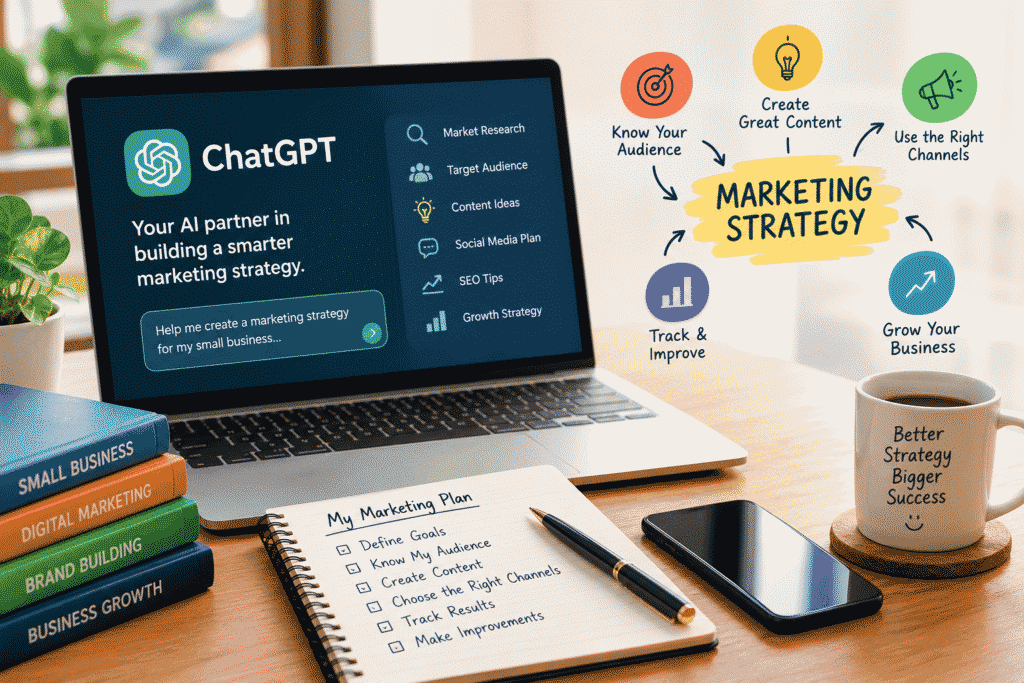
Craft a Winning Marketing Strategy for Your Small Business With ChatGPT
Running a small business often means wearing many hats. One day you’re talking to customers, the next you’re managing orders, creating social media posts, checking competitors, and trying to figure out where your next customer will come from.
Marketing can quickly become one more thing on an already-long to-do list.
But what if you could use AI to make the planning process easier?
With ChatGPT, small business owners can brainstorm ideas, understand their target audience, create content, organize campaigns, and build a practical marketing strategy without starting everything from a blank page.
Why Marketing Strategy Matters for Small Businesses
A good product or service doesn’t automatically bring customers. People need to know what you offer, why it matters, and why they should choose your business.
That’s where a marketing strategy comes in.
Instead of randomly posting on social media or trying every marketing channel at once, a strategy helps you decide:
- Who you want to reach
- What you want to achieve
- What makes your business different
- Where your customers spend their time
- What type of content you should create
- How you’ll measure your results
The goal isn’t to create a complicated 50-page marketing document. For a small business, a simple strategy that you can actually follow is often much more useful.
How ChatGPT Can Help You Build Your Strategy
ChatGPT can act as a brainstorming partner throughout the marketing process. It doesn’t replace your knowledge of your business, but it can help you turn your ideas into a more organized plan.
1. Define Your Marketing Goals
Start by deciding what you actually want your marketing to accomplish.
Maybe you want to increase online sales, attract local customers, generate leads, promote a new product, or build awareness for your brand.
You can tell ChatGPT about your business and ask it to help you turn those ideas into specific marketing goals.
For example:
“I run a small online clothing store. Help me create three realistic marketing goals for the next 90 days.”
The more information you provide, the more useful the response can become.
2. Understand Your Target Audience
Marketing becomes much easier when you know who you’re speaking to.
ChatGPT can help you create an initial customer profile based on information you provide, such as your products, location, price range, and existing customers.
You can explore questions like:
- What problems does my customer have?
- What motivates them to buy?
- What objections might they have?
- What type of content would interest them?
- What questions might they ask before purchasing?
Remember that AI-generated customer profiles are starting points. Your real customer conversations, sales data, and feedback should remain the foundation of your decisions.
3. Find Your Unique Selling Proposition
There are probably many businesses offering something similar to yours.
So why should someone choose you?
ChatGPT can help you brainstorm potential differentiators based on your actual strengths. Maybe it’s personalized service, faster delivery, better product selection, local expertise, affordable pricing, or a unique customer experience.
You can then refine those ideas into a simple message that clearly explains your value.
4. Create a Content Strategy
Once you know your audience, you need something valuable to share with them.
Instead of asking ChatGPT for “10 random social media posts,” give it context.
Tell it:
- What your business sells
- Who your customers are
- Your brand personality
- Your main marketing goal
- Which platform you’re using
- What kind of content you want
ChatGPT can then help brainstorm educational posts, product content, FAQs, promotional ideas, videos, email topics, and more.
The important part is adding your own experience and voice. AI can provide the starting point, but your business knowledge makes the content genuinely useful.
5. Choose the Right Marketing Channels
You don’t have to be everywhere.
A local service business may benefit from local search, reviews, Facebook, or community-focused marketing. An online brand might focus more heavily on Instagram, TikTok, email marketing, SEO, or content marketing.
ChatGPT can help you compare different channels based on your audience and resources.
The key is to choose channels you can consistently manage rather than spreading yourself too thin.
6. Turn Ideas Into a Marketing Calendar
Having great ideas is one thing. Actually publishing them is another.
ChatGPT can help turn your strategy into a weekly or monthly content calendar.
For example, you could create a simple schedule containing:
Monday: Educational post
Wednesday: Product or service highlight
Friday: Customer story or testimonial
Sunday: Helpful tip or behind-the-scenes content
You can adjust the schedule according to your audience, industry, and available time.
7. Analyze and Improve Your Marketing
A marketing strategy shouldn’t stay unchanged forever.
Look at what is actually happening.
Which posts get attention? Which pages generate leads? Which products sell? Which campaigns bring customers? Where are people dropping off?
You can give ChatGPT your performance data and ask it to help identify patterns or generate questions for further analysis.
Just remember: the quality of the analysis depends heavily on the quality and accuracy of the information you provide.
A Simple ChatGPT Marketing Workflow
If you’re new to AI-assisted marketing, don’t make it complicated.
Try this process:
Business → Audience → Goals → Message → Content → Channels → Campaign → Measurement → Improvement
Start with your business and customers. Build your strategy around them. Then use ChatGPT to help with research questions, brainstorming, content planning, campaign ideas, and organization.
This approach keeps AI in the role of a useful assistant rather than allowing it to make important business decisions without your judgment.
What Makes a Marketing Strategy “Winning”?
A successful marketing strategy isn’t necessarily the one with the most posts, the biggest budget, or the most complicated campaign.
It’s the one that connects the right audience with the right message and gives you a practical way to improve over time.
For a small business, consistency can make a huge difference. A clear message, useful content, regular customer engagement, and careful measurement can create a much stronger foundation than constantly jumping from one marketing trend to another.
Final Thoughts
Marketing your small business doesn’t have to feel overwhelming.
ChatGPT can help you move from scattered ideas to a structured marketing plan. You can use it to explore your audience, define goals, develop content ideas, plan campaigns, and organize your marketing activities.
But the most important ingredient is still you.
You understand your customers, your products, your market, and your business better than any AI tool. Use ChatGPT to save time, generate ideas, and organize your thinking—then add your own experience and judgment.
That’s where AI becomes genuinely useful for small business marketing.
